 Celebrate with up to 80% off
What is generative AI? How it works, real examples, and why it matters


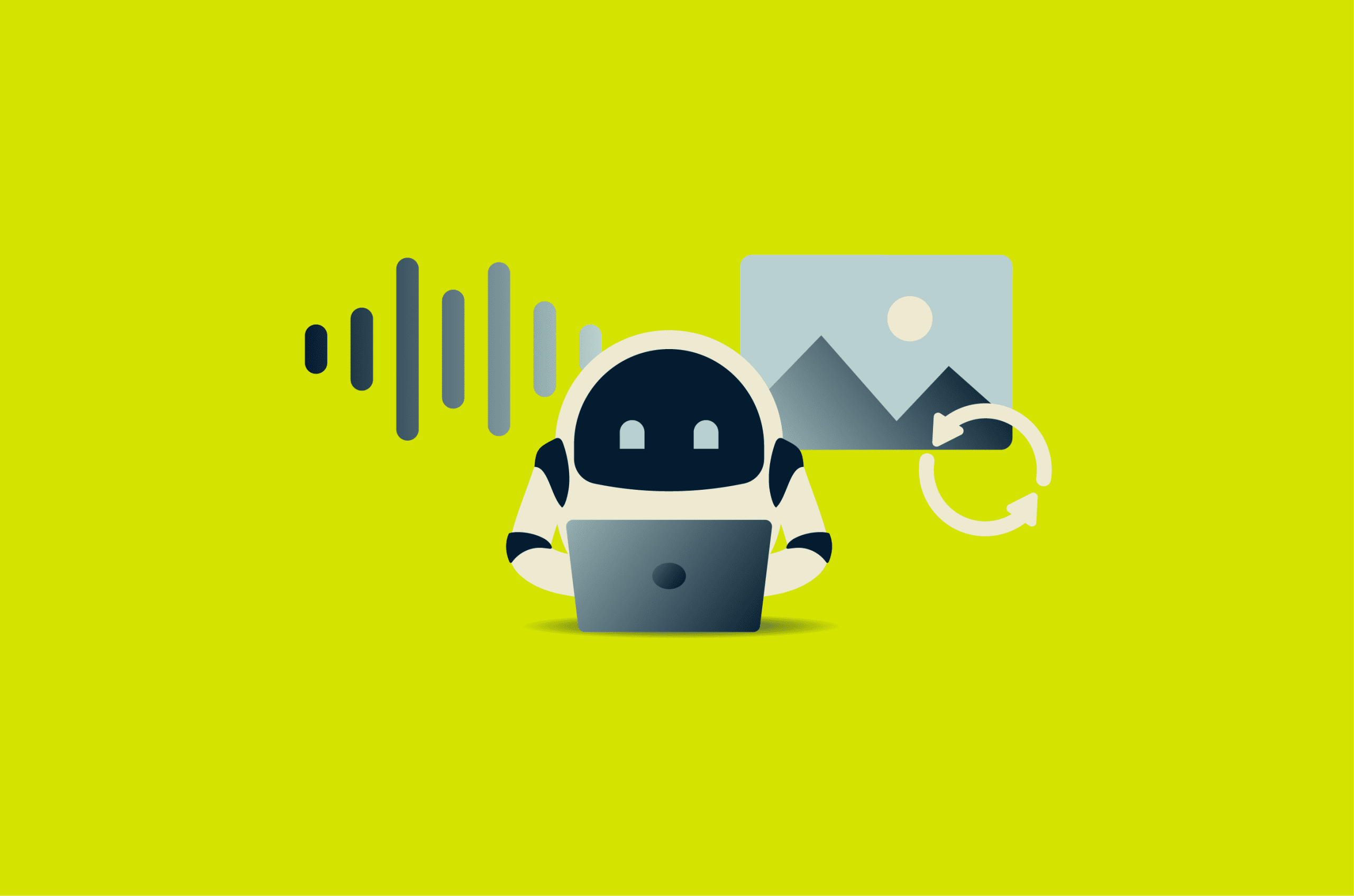
Although AI has been around for decades, generative AI in its current form has only emerged fairly recently.
While earlier AI systems classified data, detected patterns, or made predictions, generative AI builds on these foundations but goes further. It produces text, images, audio, code, and video in response to natural language prompts, turning it into one of the most widely discussed and rapidly adopted technologies of this decade.
What is generative AI?
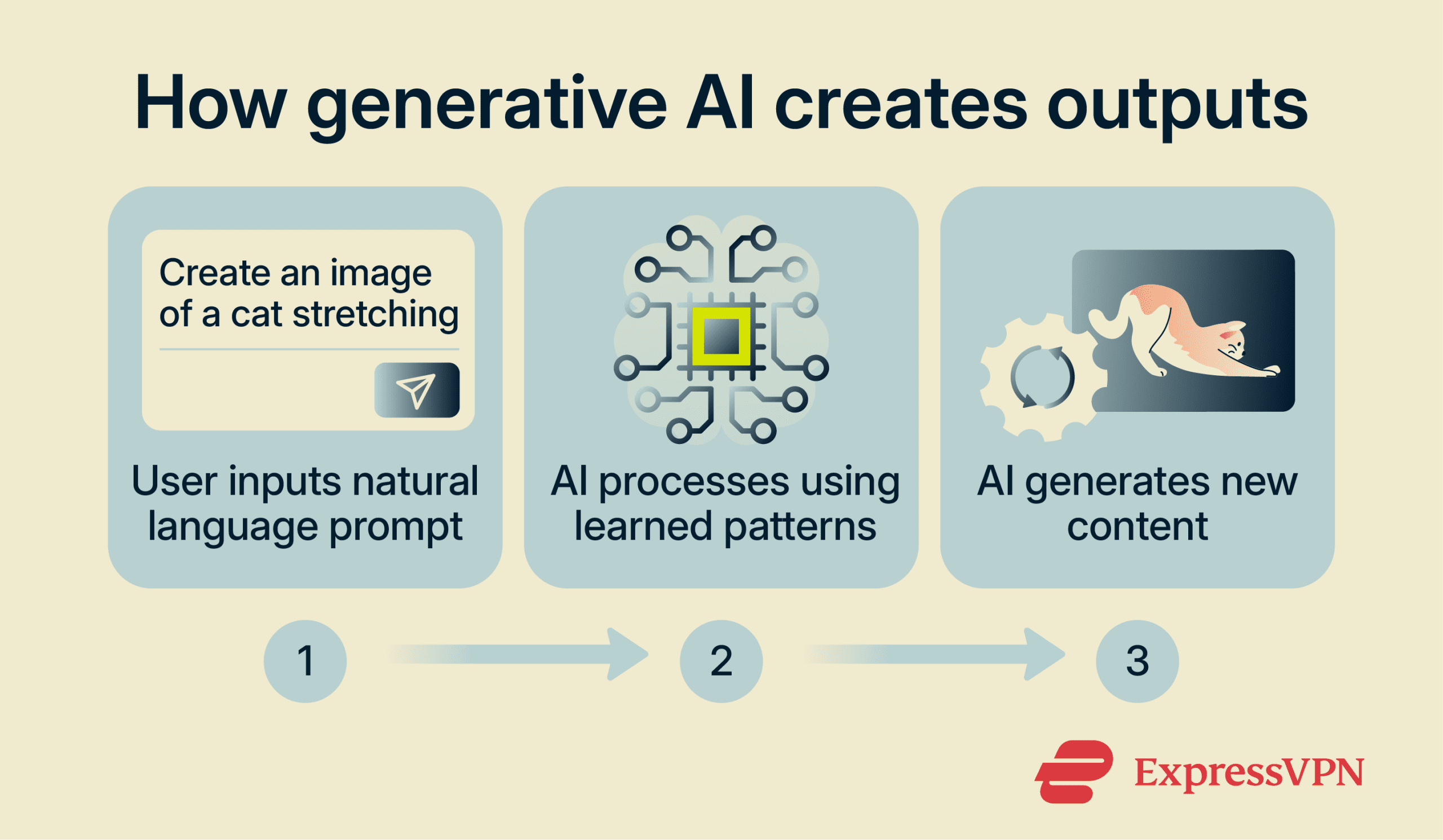
Generative AI is a type of AI that creates new content, generally in response to a user’s natural language request. It does this by learning patterns from vast sets of existing data and generating new outputs that reflect those patterns.
The term “generative AI” was popularized in mainstream discourse in 2022 when OpenAI launched ChatGPT, setting off a wave of investment and adoption that hasn’t slowed since.
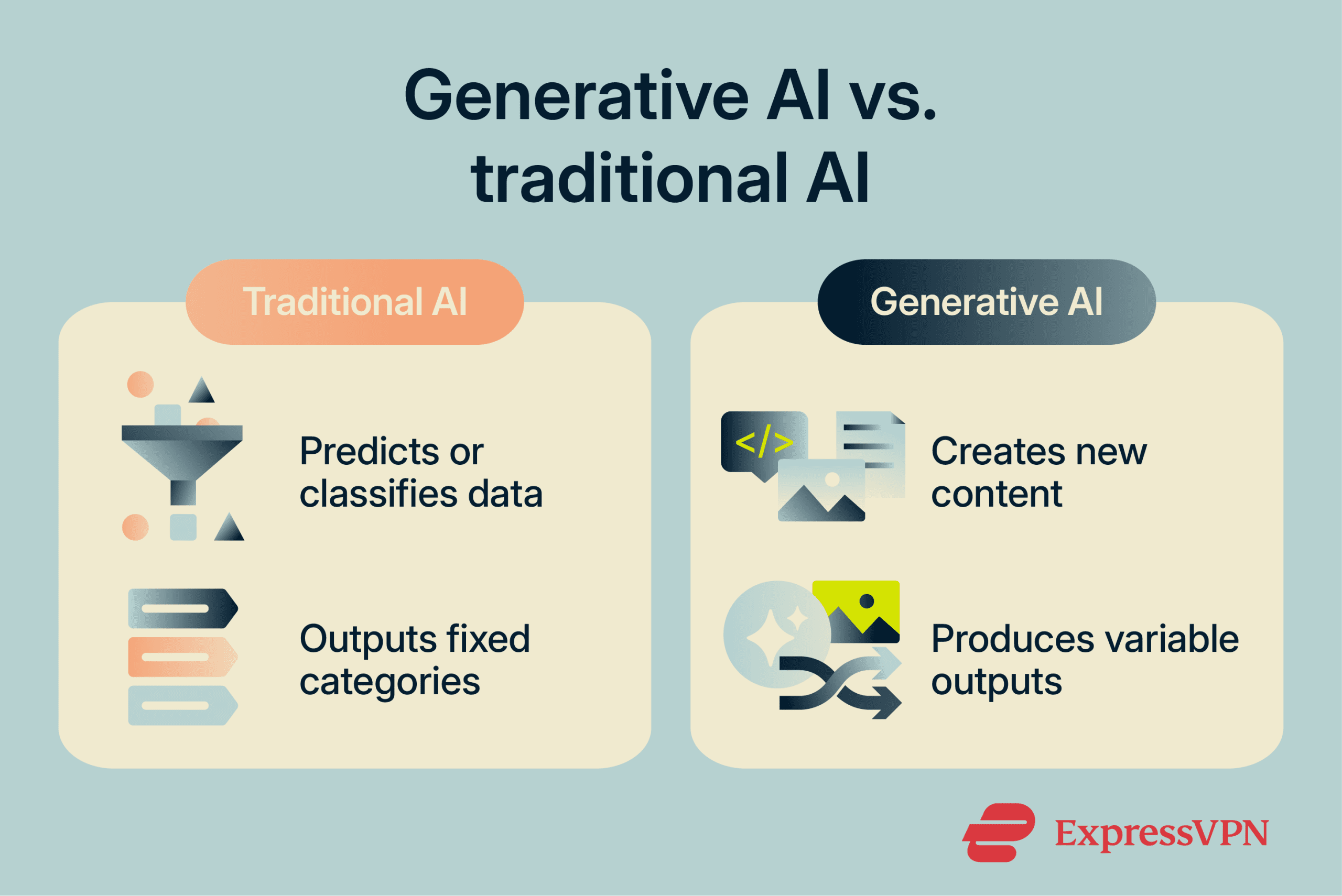
What separates generative AI from earlier AI technologies is the direction of the task. Traditional systems take an input and map it to a known category or prediction. Generative AI, by contrast, produces new outputs by modeling the underlying patterns in data and sampling from them based on a prompt or input description.
How generative AI works
Generative AI produces outputs by processing an input, running it through billions of learned parameters, and generating the most statistically coherent continuation.
How models are trained on data
Generative AI runs on foundation models, which are large, general-purpose models trained at scale that can be adapted to a wide range of downstream tasks. Rather than building a new model for every application, developers start from a pretrained foundation and customize it for their specific use case.
These models are trained on large-scale datasets comprised of a mix of publicly available, licensed, and curated data, including text, images, video, and code. Through repeated exposure, the model learns statistical patterns and structure within the data.
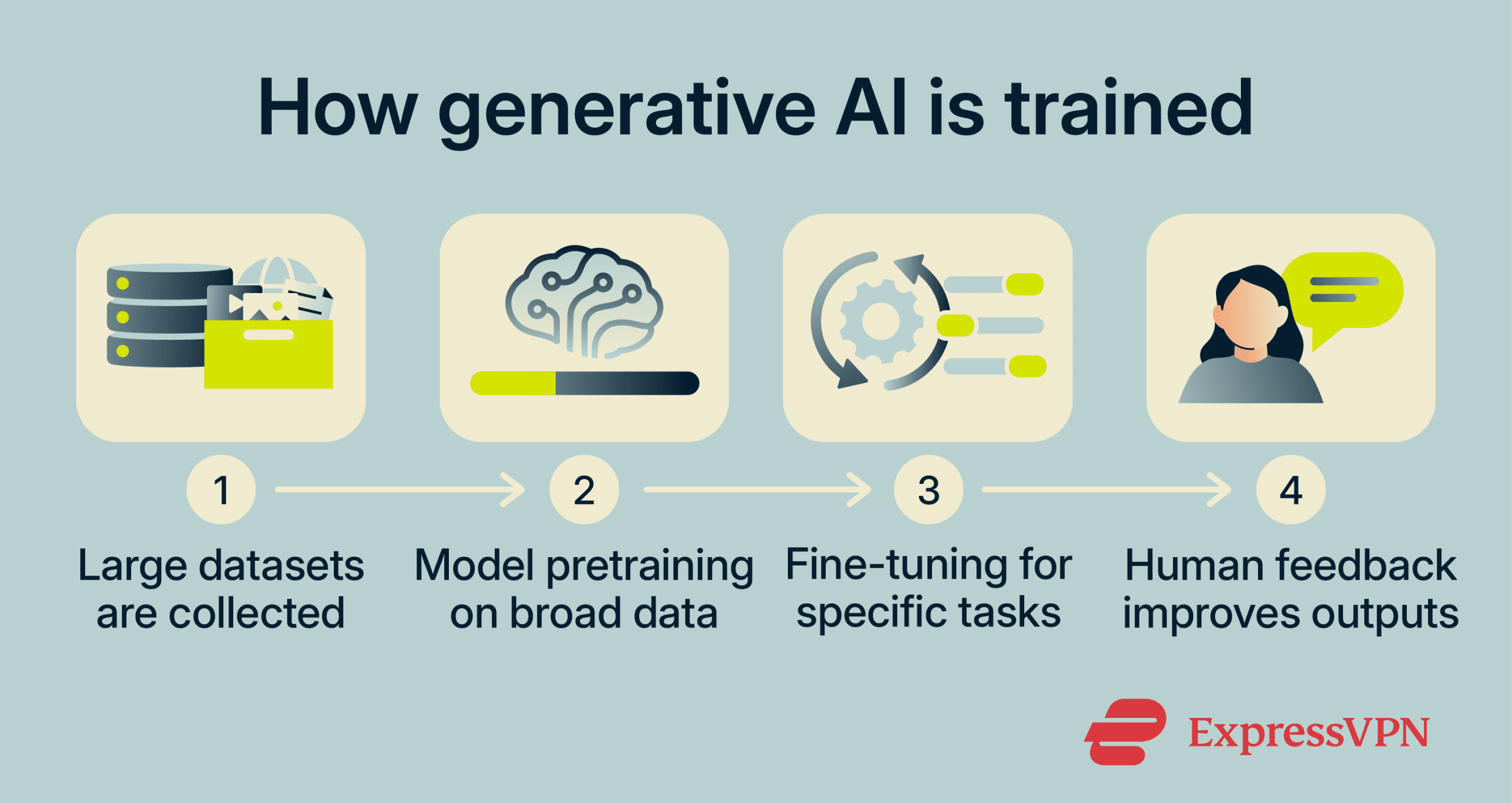
The training itself typically runs in stages like pretraining, fine-tuning, and reinforcement learning from human feedback (RLHF). The pretraining stage builds broad general knowledge from a large dataset, while fine-tuning narrows the model's behavior using smaller, task-specific labeled examples. RLHF then brings human raters into the loop, who score outputs so the model learns to produce responses that people find useful and accurate.
How generative AI creates new content
At inference time, the model takes a prompt and produces a response by drawing on encoded patterns learned during training. For language models, this happens through next-token prediction, in which the model calculates the probability of each possible next word given everything that came before it, selects one, and repeats the process until the response is complete.
While base models generate outputs purely from their learned parameters without looking anything up, modern AI systems are often paired with retrieval tools, like web search or retrieval-augmented generation (RAG), to verify facts. However, even with these additions, the underlying process remains probabilistic, which is why the same prompt can produce different results across runs. It also explains why models can sometimes generate confident-sounding answers that are factually incorrect.
Modern image models commonly use diffusion models, where the model is trained by taking real images and gradually turning them into random visual noise, then learning how to reverse that process. When generating a new image, the model is guided by patterns it learned from large datasets of images paired with text descriptions. This allows the model to connect words in a prompt to visual features like objects, colors, and styles, gradually shaping the noise into a coherent image that matches the description.
While diffusion models currently dominate most widely used and open-source image generators, researchers are also exploring alternative approaches, including autoregressive image models.
The role of machine learning and neural networks
Machine learning (ML) is the broader field generative AI sits within. Generative models specifically rely on deep learning, which uses stacked neural networks loosely inspired by how neurons connect in the brain.
Each layer in the network takes a representation of the data and transforms it into a slightly more abstract one. Deeper layers pick up increasingly complex patterns: for example, early layers might detect basic syntax, while later ones grasp reasoning and context.
The parameters that control these transformations are tuned during training and represent the model's learned knowledge. GPT-3, for instance, has 175 billion of them.
Types of generative AI models
Generative AI is not one single technology, but rather a collection of several distinct architectures, each with a separate function.
Transformer models
Transformer architecture arrived in the landmark 2017 paper "Attention Is All You Need" from Google researchers, with the core breakthrough being the self-attention mechanism.
Unlike earlier architectures that processed text word-by-word in sequence, transformers read an entire input at once and weigh how much each part should influence every other part, making them far better at handling long-range context.
Modern large language models (LLMs) like ChatGPT are built on transformer architecture. These models use self-attention to understand context across entire sentences or documents, enabling them to generate coherent, human-like text and respond to complex prompts.
Diffusion models
The technique that inspired diffusion models was introduced in 2015 by Sohl-Dickstein et al. in the paper titled “Deep Unsupervised Learning using Nonequilibrium Thermodynamics.” Training works by progressively corrupting data with noise until it’s unrecognizable, then teaching the model to reverse that process and “diffuse” the noise to achieve the desired output.
Diffusion models are widely used in image generation, with Stable Diffusion being one well-known example. Some earlier OpenAI image systems, such as DALL-E 2, also used diffusion-based techniques, though current commercial image-generation systems often combine or replace older approaches.
Generative adversarial networks (GANs)
Generative adversarial networks (GANs), introduced in 2014 by researchers from the University of Montreal, pit two neural networks against each other, with a generator trying to produce realistic outputs and a discriminator trying to spot which outputs are fake. As the two models compete, both improve, and the generator eventually learns to produce results the discriminator can’t easily distinguish from real data.
Although they’re used primarily for image and video generation, they excel at other tasks like transferring style (for example, altering an image from one art style to another).
Variational autoencoders (VAEs)
Variational autoencoders (VAEs) were introduced in 2013 by Diederik P. Kingma and Max Welling. They use an encoder-decoder structure, where the encoder compresses an input into a compact numerical representation, while the decoder learns to reconstruct new samples from representations like it.
VAEs have been used in a variety of AI applications, from the generation of large molecular structures to synthesizing new data based on the input data they’re trained on.
Generative AI vs. traditional AI
AI is a term that covers a wide range of systems with different capabilities, ranging from traditional ML models to the generative AI systems that are popular today.
Key differences in how they work
The first key difference between traditional (discriminative) AI and generative AI is their purpose. Traditional AI systems are usually built to perform specific, discriminative tasks, such as filtering spam, making predictions, flagging fraudulent transactions, recognizing faces, or recommending products. These models learn patterns from data and use them to map inputs to specific outputs, such as labels, scores, or decisions.
Generative AI, by contrast, is designed to create new content, such as text, images, video, music, or code. Rather than only classifying or predicting an output, it learns patterns in its training data and uses them to produce new outputs that resemble the structure, style, or logic of that data.
When generative AI is used
Generative AI is used for tasks that require producing new content. Whether that’s an organization creating new product descriptions, turning natural language into functioning code, creating visuals for marketing, or generating synthetic datasets, generative AI is a useful tool.
Agentic AI vs. generative AI
Another term that’s become increasingly popular is agentic AI. Agentic AI is a related concept that builds on generative models. While generative AI typically responds to prompts, agentic AI systems are designed to pursue goals over multiple steps. They can plan, use tools, maintain context, and execute sequences of actions with less direct human prompting. The distinction is less about the underlying model and more about how the system is structured and operates.
Real-world applications of generative AI
The applications of generative AI span a wide range of industries and functions, from creative production to scientific research.
Content creation
Content creation is perhaps one of the most common use cases of generative AI. Text-based models can draft articles, reports, marketing copy, or documentation in mere seconds, while models like DALL-E can create detailed and photorealistic images from a single prompt. Models such as Google’s Veo can even generate highly detailed videos with realistic physics and sound effects through a simple natural language prompt.
Business and productivity tools
Organizations have been incorporating generative AI into their digital core for tasks like summarizing lengthy documents, generating first-draft reports, personalizing customer communications, and automating support responses. Stanford’s 2026 AI index report states that organizational AI adoption reached 88% among surveyed organizations, and generative AI was used in at least one business function at 70% of organizations.
Software development
Code generation is one of the clearest productivity boosts generative AI delivers. Tools like Claude Code and OpenAI Codex translate natural language descriptions into working code across Python, JavaScript, C#, and other languages. Developers can use AI tools to write boilerplate faster, debug more efficiently, and generate test cases without doing it by hand.
Healthcare and research
Generative AI is accelerating drug discovery by helping researchers design and screen novel molecular candidates more efficiently. Instead of testing every possible compound manually, researchers can use generative models to suggest molecules with desired properties, such as the ability to bind to a specific target or avoid certain toxic effects.
Popular generative AI tools
Many tools have surfaced since the rise of generative AI, some more widely used than others. Below are some of the most popular gen-AI tools available today.
ChatGPT
ChatGPT is OpenAI's consumer and enterprise AI assistant, built on the GPT family of transformer LLMs. Since launching in November 2022, it’s taken up roughly three quarters of the generative AI chatbot market.
Claude
Claude is Anthropic’s generative AI assistant, built with a strong focus on safety, reasoning, and long-context understanding. It’s widely used for tasks such as writing, coding, document analysis, and enterprise AI workflows.
Google Gemini
Gemini is Google's multimodal generative AI, built to handle text, images, audio, and video within a single model. Its growth has been driven by a tight integration with Google’s ecosystem and utilities like Workspace.
Microsoft Copilot
Copilot is Microsoft's AI offering that’s embedded across its 365 suite, including Word, Excel, Outlook, and Teams. What sets it apart is its depth of enterprise integration, letting it summarize a meeting while it’s happening, prepare notes for upcoming meetings, generate full presentations using data from internal documents, and more.
DALL-E and Midjourney
OpenAI’s DALL-E helped popularize text-to-image generation, while Midjourney is an independent image-generation platform known for stylized, high-quality visual outputs. However, the image-generation landscape changes quickly: OpenAI’s current API documentation now points users to GPT Image models for image generation, and some older DALL-E deployments have been retired or replaced.
Alongside mainstream AI platforms, newer privacy-focused tools are also emerging. For example, ExpressAI is ExpressVPN’s AI assistant, designed to provide generative AI features with an emphasis on private and secure interactions. It offers access to several AI models, including Gemma 4 31B, a multimodal model that can analyze text, images, and uploaded videos. It’s available on the Express Pro plan, and it protects all conversations with zero-access encryption.
Benefits of generative AI
Generative AI provides many benefits, ranging from increased productivity to assistance with creative tasks.
Faster content creation and workflows
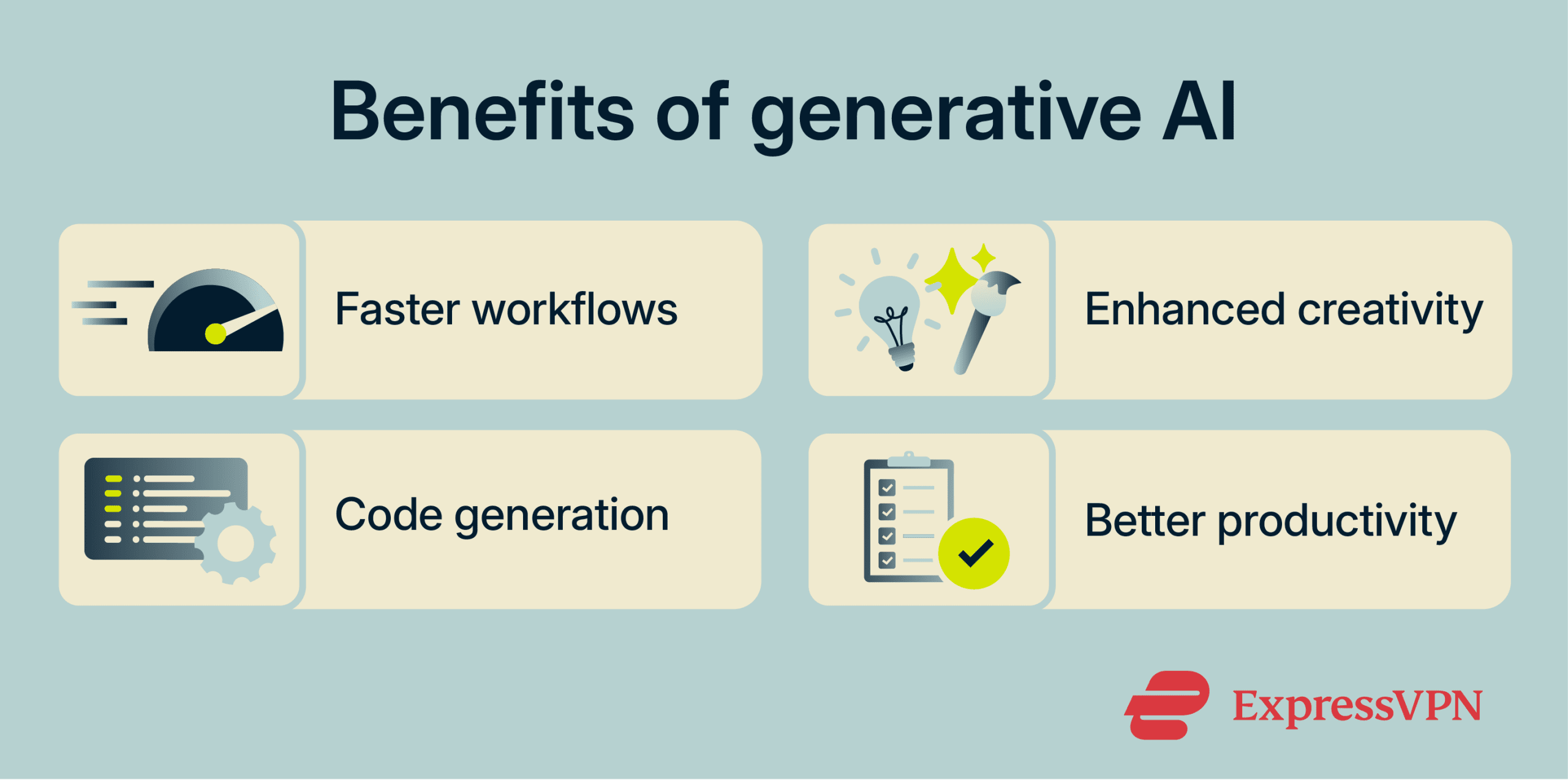
One of the most noticeable benefits of generative AI is that it can speed up certain workflows, especially repetitive or text-heavy tasks. For example, a study published by the U.S. National Bureau of Economic Research found that access to a generative AI assistant increased productivity among customer support agents by 14%, measured by the number of issues resolved per hour. The gains were especially strong among less experienced workers, suggesting that generative AI can be particularly useful when it helps people apply existing knowledge more quickly or consistently.
For content teams, this may translate into faster drafting, summarizing, outlining, brainstorming, editing, and repurposing. However, the effect depends heavily on the task, the quality of the AI tool, and how much human review is built into the workflow.
Enhanced creativity and ideation
Generative AI makes it much easier to explore ideas. Instead of starting from a blank page, writers, designers, and product teams can generate a draft or a set of visual concepts in seconds and use those as a starting point. Both businesses and individuals can use it to generate prototypes within defined constraints and iterate from there.
Generating and troubleshooting code
Generative AI models can generate large chunks of code to streamline the software development process. They can also generate tests for the same code, helping ensure that it remains functional across various scenarios. They’re effective at troubleshooting, too, as developers can give AI faulty code and ask it to explain where the issue is.
Round-the-clock availability
A noteworthy benefit of generative AI systems is that they can operate around the clock without fatigue. This is especially valuable in environments that require consistent real-time availability (for example, customer support).
Challenges and limitations of generative AI
While it has many benefits, generative AI also has its share of limitations. Many of these aren’t unique to generative AI; issues like bias and data quality issues affect the field of ML as a whole.
Accuracy and hallucinations
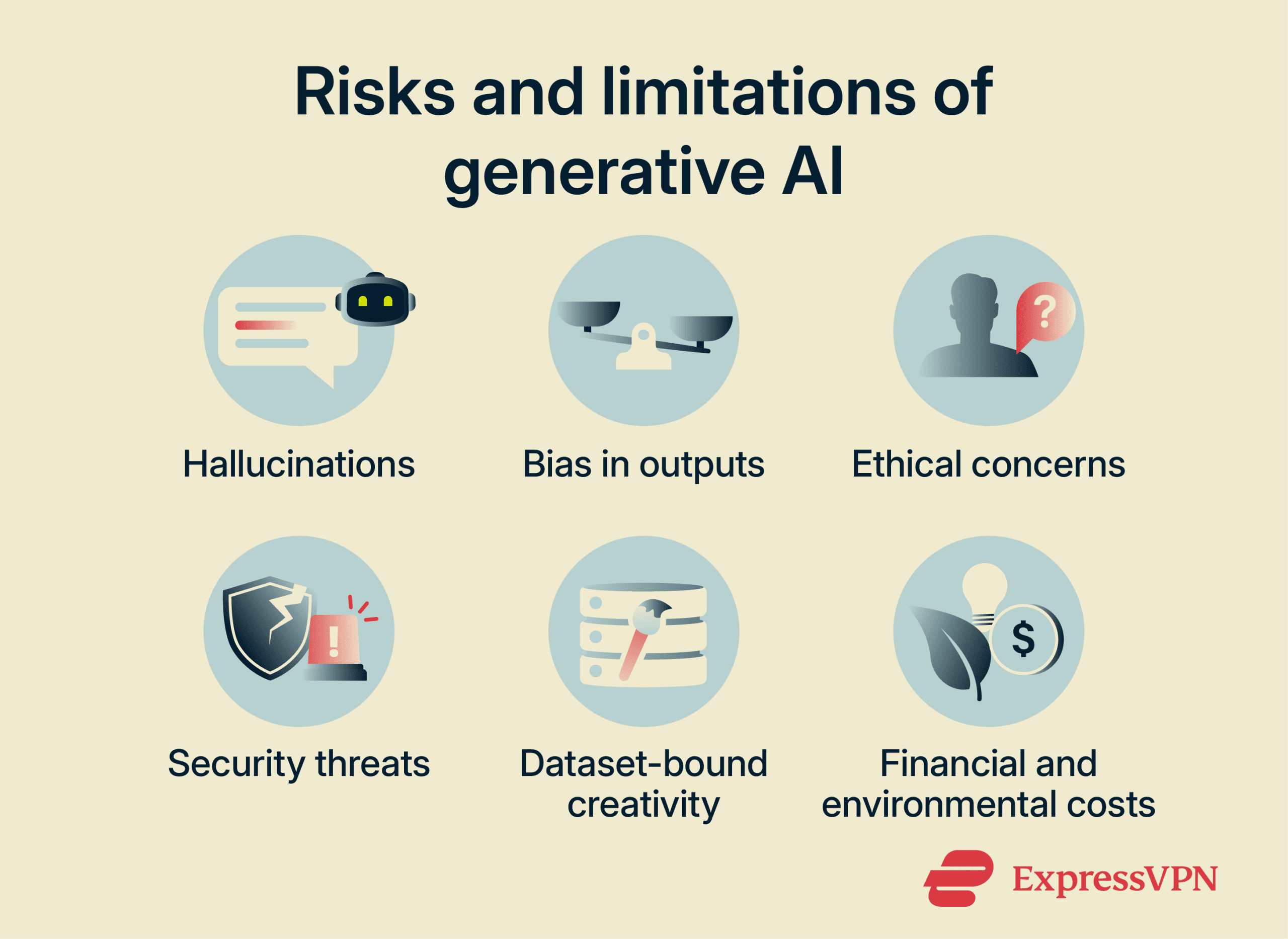
A hallucination in generative AI is what happens when a model generates content that sounds correct but isn’t. The National Institute of Standards and Technology (NIST) classifies these as “confabulations,” and they’re a result of how probabilistic text generation works: the model is predicting what comes next based on patterns, not checking facts against a verified source.
Bias and data quality issues
Bias in generative AI comes from the data the model was trained on. Training sets drawn from the internet inevitably carry the same imbalances, stereotypes, and gaps that exist in that data. Generative AI models can reproduce and amplify those biases at scale, affecting everything from hiring tools to medical summaries.
Security risks
Generative AI has introduced a new attack surface for both organizations and individuals.
Prompt injection, where attackers embed hidden instructions in inputs to override a model's behavior, is listed as a top risk for LLM applications by the Open Worldwide Application Security Project (OWASP). For example, researchers have shown that attackers can manipulate how an AI system interprets context, causing it to misidentify the source or intent of information and ignore malicious content.
On the social engineering side, AI-powered phishing and AI scams are harder to spot because attackers can generate grammatically polished, contextually convincing messages, eliminating what used to be some key red flags to help spot phishing attempts. Additionally, deepfake technology powered by generative models has made audio and video fraud realistic enough to deceive many people.
Ethical considerations
The legal and ethical questions surrounding generative AI remain largely unresolved, with ongoing litigation shaping how these considerations will be handled in the future. In cases like Getty Images vs. Stability AI, plaintiffs alleged that AI systems infringe copyright and even reproduce protected elements like watermarks in their outputs.
Other lawsuits, including Dow Jones & Company, Inc. vs. Perplexity AI, Inc., focus on the use of copyrighted news content in AI systems. Together, these cases highlight unresolved questions around copyright law, fair use, and the responsibilities of AI developers.
Privacy is another growing concern. Since these models are trained on vast datasets scraped from the internet, they can inadvertently memorize and reproduce personal information. According to the 2025 TrustArc Global Privacy Benchmarks Report, AI has ranked as the top privacy challenge for organizations worldwide for the past year.
Finally, there are important concerns around labor displacement. The International Labour Organization estimates that one in four workers globally is in a role with some degree of generative AI exposure, though it notes that human input in most cases is still necessary.
Dataset-bound creativity
Although generative AI can aid in creative processes, it’s important to remember that the level of creativity a generative AI can achieve depends on the data it’s trained on, and it’s unlikely to come up with something that wasn’t in its original training parameters or, in other words, truly original.
Cost of operations
Training and running generative AI systems can be expensive. Nonprofit research institute Epoch AI has estimated that frontier language model training costs have increased by about 3.5x per year since 2020.
Costs do not stop after training. Inference (the process of running a model to generate outputs for users) can also become expensive at scale, especially for systems that make repeated model calls, use long context windows, or rely on agentic workflows. Deloitte has warned that some enterprises are already seeing monthly AI bills in the tens of millions of dollars.
There is also an environmental cost tied to the energy required to run data centers. According to Pew Research Center, citing International Energy Agency (IEA) estimates, U.S. data centers consumed 183TWh of electricity in 2024, or more than 4% of total U.S. electricity consumption. Pew says this is projected to rise to 426TWh by 2030, a 133% increase, though it is difficult to isolate exactly how much of that demand comes from AI specifically.
The future of generative AI
Given the speed at which generative AI is evolving, the next few years may look entirely different from today.
For individuals, generative AI will likely become less of a standalone tool and more of a default layer inside software already in daily use. Google Search's AI Overviews now serve 2 billion users monthly, meaning a large portion of the world already interacts with generative AI without explicitly choosing to. Additionally, anyone who wants to develop software can now access various AI-powered integrated development environments (IDEs) for streamlined development.
For businesses, generative AI is increasingly being used to speed up work, automate routine tasks, support customer service, assist with coding, and improve internal knowledge management. But the impact is uneven. Some companies are using AI mainly to make existing workflows faster, while others are beginning to redesign products, services, or core processes around it. Deloitte’s 2026 enterprise AI survey found that productivity and efficiency gains were the most commonly reported benefits, while deeper business transformation was still less widespread.
FAQ
How is generative AI different from tools like ChatGPT?
Which industries benefit most from generative AI?
What are the risks of using generative AI at work?
How can beginners start learning generative AI?